
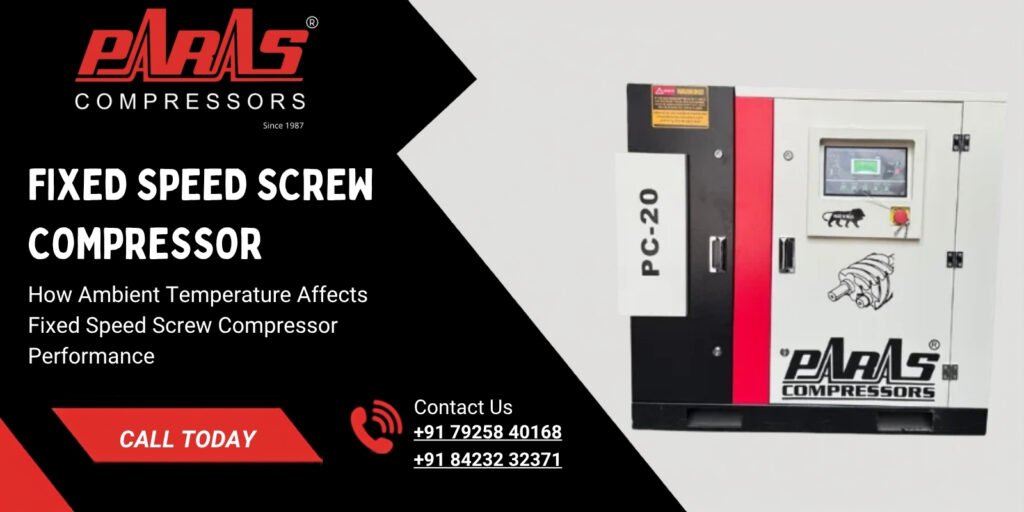
In industrial manufacturing facilities, ambient room temperature plays a massive, often overlooked role in mechanical efficiency. When you operate a Fixed Speed Screw Compressor, the surrounding environmental conditions dictate how effectively the unit rejects heat.
Compression inherently generates thermal energy. As ambient temperatures rise—especially during peak summer months in industrial hubs—the baseline operating temperature of the compressor climbs proportionally.
Key Impacts of High Ambient Temperatures
1. Reduced Volumetric Efficiency
As intake air temperature increases, air density decreases. Warmer air contains fewer molecules per cubic foot, meaning your compressor has to work harder to deliver the same mass flow rate (CFM). This results in lower effective output at your pneumatic tools.
2. Thermal Breakdown of Compressor Oil
Rotary screw compressors rely heavily on specialized lubricants for sealing, cooling, and lubrication. When ambient heat pushes operating oil temperatures past normal thresholds (typically above 90°C to 95°C):
The viscosity of the oil drops.
Lubrication film thickness thins, increasing friction and wear on rotor bearings.
Oil oxidation accelerates, shortening fluid lifespan and leading to varnish buildup.
3. Premature Thermal Tripping
Most industrial units are equipped with safety thermostats. If the ambient environment lacks proper ventilation, the compressor will frequently trip on high discharge temperatures, causing unexpected production downtime.
Best Practices to Protect Your System
Optimize Compressor Room Ventilation: Ensure your compressor room features adequate cross-ventilation, louvered intake vents, and exhaust fans capable of exhausting hot air completely outside the building footprint.
Maintain Oil Coolers: Regularly inspect and clean both air and oil cooler cores. Dust, oil mist, and debris accumulation severely restrict heat dissipation.
Consider Upgrades for High-Demand Environments: If your facility experiences extreme seasonal heat spikes, ensure your compressed air system is paired with adequate Air Treatment Equipment and robust Air Dryers to handle elevated moisture levels resulting from hot intake air.
Conclusion
Managing ambient heat is critical to extending the operational life of your compressed air architecture. If your current setup is struggling with thermal efficiency or fluctuating plant pressures, evaluating your compressor room layout is the first step.
Need help sizing or optimizing your system? Explore our robust range of industrial solutions, including our heavy-duty Fixed Speed Screw Compressors and reliable Air Treatment Equipment, or reach out to our team for a professional facility assessment.
