
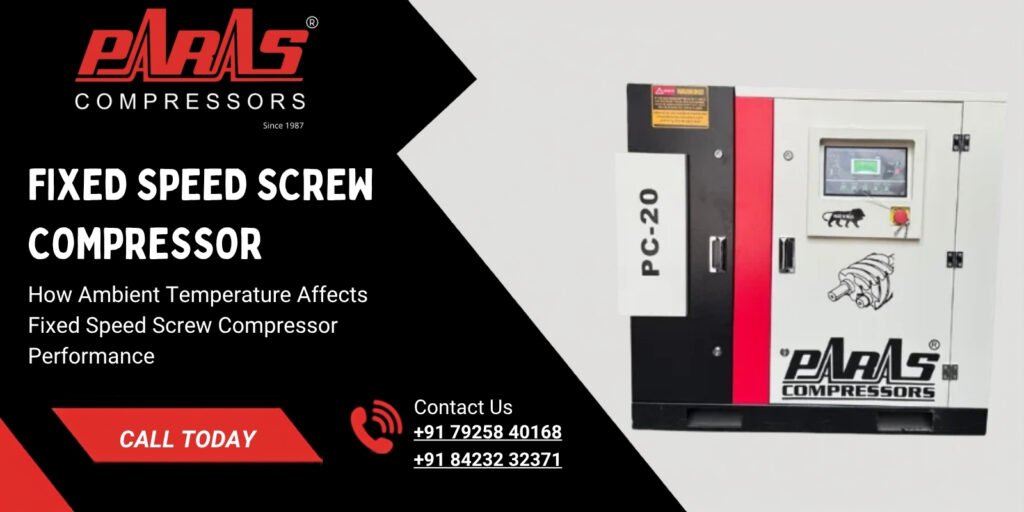
In many manufacturing plants and fabrication workshops, compressed air demand fluctuates throughout the day. If your facility runs a traditional Fixed Speed Screw Compressor, the motor operates at a constant, maximum RPM whenever the machine is switched on.
Because the motor cannot speed up or slow down to match varying plant air demands, the compressor relies on a mechanical load/unload control system (or modulation valve) to regulate pressure. While this mechanism keeps plant pressure within a set window, frequent cycling introduces hidden mechanical and financial costs.
The Mechanics of Load vs. Unload
To understand why cycling causes wear, it helps to look at what happens inside the machine:
Loaded State: The inlet valve opens fully, allowing ambient air to enter the air end. The compressor actively pumps air into the system network and fills the storage tanks.
Unloaded State: When plant pressure reaches the upper cut-out limit, the inlet valve closes, and a blow-down valve vents internal pressure down to a baseline idle pressure. The motor continues to spin idly, consuming roughly 25% to 30% of its full-load electrical power without producing any useful compressed air.
Hidden Costs and Wear Factors
1. Severe Mechanical Stress on Internal Valves
Every time a compressor transitions from loaded to unloaded (and vice versa), internal solenoid valves, blow-down valves, and the main inlet butterfly valve actuate. Over thousands of cycles a week, this constant snapping motion fatigues springs, wears out seals, and can lead to premature valve failure.
2. Thermal Shock and Moisture Accumulation
When a fixed speed compressor goes into an unloaded idle state, internal operating temperatures drop rapidly because compression work stops. When it suddenly re-loads, temperatures climb back up. This constant thermal fluctuation creates internal condensation inside the oil separator tank, which mixes with compressor oil and increases the risk of premature fluid breakdown.
3. Continuous Electricity Waste During Idle
While idling, the motor draws unmanaged power just to keep the rotors spinning against a partial vacuum. If your facility experiences intermittent air usage, your compressor might spend 40% to 50% of its running time completely unloaded, burning money on wasted kilowatt-hours.
How to Mitigate Load/Unload Fatigue
If your production line has erratic air demand profiles, you can minimize the wear and tear of aggressive loading cycles using several strategies:
Install an Adequately Sized Air Receiver: Adding a larger Air Receiver tank acts as a buffer, smoothing out pressure spikes and dramatically extending the time between load/unload cycles.
Evaluate System Demand Profiles: If your duty cycle reveals prolonged periods of low or erratic consumption, transitioning your primary system to a Variable Speed Drive Screw Air Compressor or a Two-Stage Permanent Magnet Variable Speed Screw Compressor eliminates wasteful load/unload cycling entirely by matching motor speed directly to demand.
Incorporate Proper Air Treatment: Protect downstream machinery from moisture surges caused by cycling temperatures by ensuring your setup includes robust Air Treatment Equipment and high-efficiency Air Dryers.
Conclusion
Fixed speed screw compressors are workhorses, but they perform best in stable, continuous-load environments. Recognizing how your plant’s air demand interacts with your compressor’s control cycle is the key to preventing unexpected downtime.
Experiencing high energy bills or frequent compressor wear? Explore our durable Fixed Speed Screw Compressors or upgrade your efficiency with our advanced Variable Speed Drive Screw Air Compressors and proper Air Receivers.
