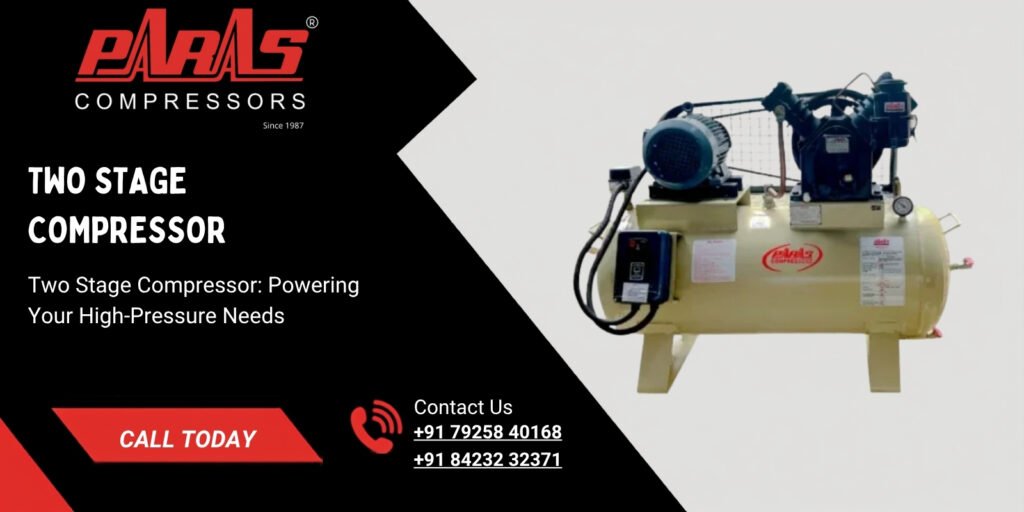
When your industrial tasks require more than standard workshop pressure, a basic setup just won’t cut it. For applications demanding higher PSI—such as heavy-duty pneumatic machinery, sandblasting, or precision manufacturing—a Two Stage Compressor is the professional choice.
What is a Two Stage Compressor?
Unlike a Single Stage Compressor that compresses air in one stroke, a two-stage unit does it in two.
First Stage: Air is compressed to an intermediate pressure.
Intercooling: The air passes through an intercooler, where it is cooled down significantly.
Second Stage: The air is compressed to its final, higher pressure level.
This multi-stage process is not just about power; it is about efficiency. By cooling the air between stages, the compressor requires less energy to achieve the final pressure, and the machine runs significantly cooler, which drastically extends the life of its components.
Why Industries Prefer Two Stage Technology
1. Higher Pressure Capability
If your production requires 150 PSI or higher, a Two Stage Compressor is built specifically for these demands. It handles high-load environments with ease, ensuring your high-pressure pneumatic tools operate at peak performance without stalling.
2. Superior Energy Efficiency
Because the compression load is split, the motor doesn’t have to work as hard to reach the final pressure. This results in less electricity consumption compared to a single-stage unit forced to perform the same task, providing a better long-term return on your investment.
3. Increased Durability
Heat is the enemy of any Reciprocating Air Compressor. By utilizing an intercooler to manage thermal buildup, a two-stage design experiences less thermal stress. This means fewer breakdowns, less maintenance, and a much longer machine life, even in 24/7 industrial environments.
When to Upgrade?
If you find that your current single-stage unit is constantly running hot, struggling to reach the required PSI, or causing production delays, it is a clear sign that your operation has outgrown its current equipment. Moving up to a two-stage system is a strategic way to boost your productivity.
Best Practices for Maintenance
Intercooler Cleaning: Keep the intercooler fins free of dust and debris to ensure maximum cooling efficiency.
Air Treatment: Always pair your Two Stage Compressor with reliable Air Treatment Equipment to ensure the high-pressure air remains clean and dry.
Oil Maintenance: Because these units handle higher loads, sticking to the manufacturer’s oil change intervals is critical for longevity.
Conclusion
A Two Stage Compressor is the perfect blend of power, efficiency, and durability. It provides the high-pressure capability that modern industrial shops need to stay competitive.
At Paras Compressors, we offer a range of robust two-stage units designed to handle your toughest industrial challenges with reliability.
Are you ready to level up your air pressure?
Explore our range of Two Stage Compressors and find the power your facility demands.
Get A Free Consultation