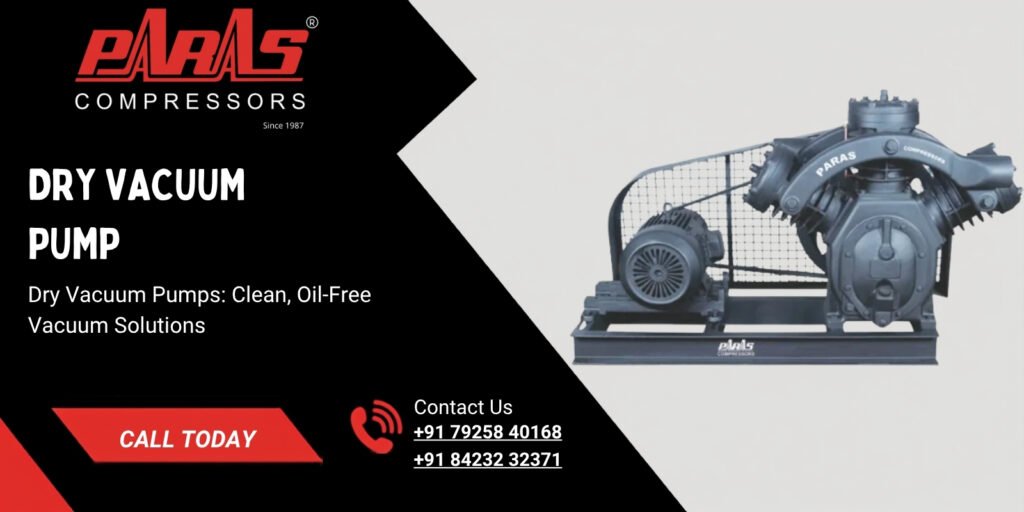
In many sensitive industrial and laboratory applications, the presence of oil vapor in a vacuum system is simply not an option. Whether you are working in pharmaceutical packaging, electronic manufacturing, or research laboratories, the need for a Dry Vacuum Pump is essential to maintain the integrity of your process.
Why Choose "Dry" Technology?
Traditional vacuum pumps often use oil to lubricate and seal the internal chambers. While effective for basic tasks, these pumps risk introducing oil mist or vapor into the vacuum line. A Dry Vacuum Pump is engineered to operate without any oil in the compression chamber, ensuring that the vacuum process remains completely contaminant-free.
Key Advantages for High-Purity Processes
1. Zero Oil Contamination
Because there is no oil involved in the compression process, your vacuum lines remain clean. This is critical for processes like thin-film coating, food packaging, or chemical analysis, where even a microscopic trace of oil can ruin the end product or compromise your safety standards.
2. Reduced Maintenance
In oil-lubricated systems, oil changes and oil filter replacements are constant chores. A Dry Vacuum Pump eliminates these requirements. You save time on maintenance and eliminate the operational cost and environmental concern of disposing of used, contaminated oil.
3. Better Environmental Compliance
By removing oil from the equation, you create a cleaner working environment for your team and ensure compliance with strict environmental regulations regarding oil mist emissions. It is the sustainable, modern choice for any forward-thinking facility.
Ideal Applications for Dry Vacuum
Packaging and Bottling: Ensuring hygienic conditions for food and beverage products.
Electronics and Semiconductors: Maintaining high-purity atmospheres for delicate assembly.
Pharmaceutical and Biotech: Preventing cross-contamination in sensitive chemical processing.
Laboratories: Supporting research that requires high vacuum without background contamination.
Maintenance Tips for Your Vacuum System
Inlet Filtration: Since the pump is “dry,” it is more sensitive to dust and particulate intake. Always use high-quality inlet filters to protect the internal components.
Monitoring Temperature: Dry pumps operate under specific thermal parameters; ensure your pump is installed in a well-ventilated space to maintain optimal performance.
Integration: Combine your vacuum setup with high-quality Air Treatment Equipment to ensure your entire pneumatic and vacuum network remains pristine.
Conclusion
A Dry Vacuum Pump is the gold standard for any industry that values purity, cleanliness, and low-maintenance operation. If your process requires a reliable vacuum without the risk of oil-related compromise, this is the technology you need.
At Paras Compressors, we supply professional-grade vacuum solutions designed to meet the highest purity standards in your industry.
Is your process ready for an oil-free upgrade?
Explore our range of Dry Vacuum Pumps and take the next step toward a cleaner production environment.
Get A Free Consultation