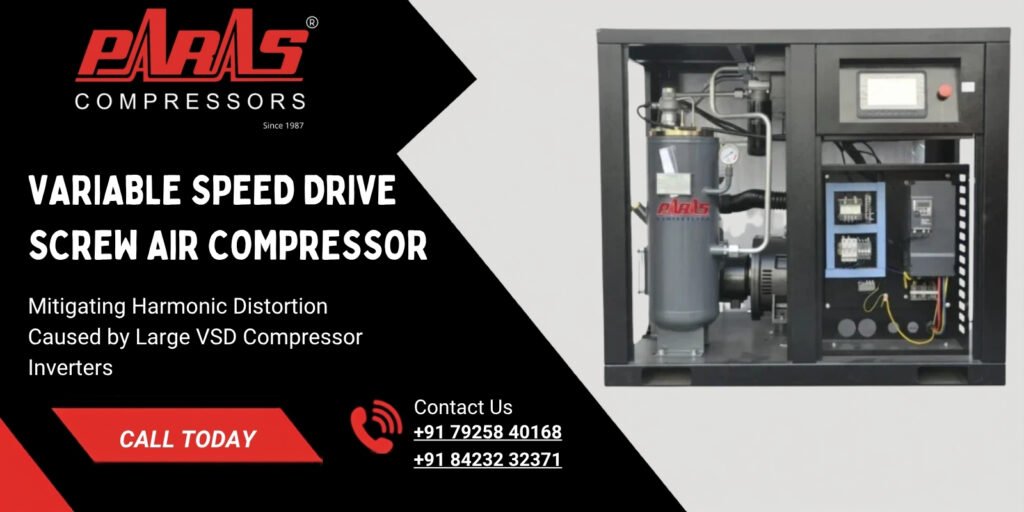
Variable Speed Drive (VSD) compressors are celebrated across modern manufacturing for their exceptional energy efficiency. By dynamically matching motor speed to plant demand, they eliminate the electricity waste associated with traditional fixed-speed machines. However, the internal technology that makes this magic possible—the frequency inverter (variable frequency drive)—introduces a complex engineering challenge: electrical harmonic distortion.
Understanding Harmonics in Industrial Facilities
An industrial VSD compressor works by taking standard AC power (typically 415V, 50Hz), converting it into DC power via a rectifier, and then synthesizing a variable frequency AC output to control the motor speed.
Because this conversion process draws current in rapid, non-linear pulses rather than a smooth sinusoidal wave, it creates secondary high-frequency electrical waves known as harmonics.
Why Harmonics Matter in a Factory Setting:
Overheating Transformers and Cables: Harmonic currents circulate through your plant’s electrical distribution network, generating excessive thermal heat in distribution transformers, switchboards, and power cables.
Tripping Circuit Breakers: Unmitigated harmonics can cause nuisance tripping of circuit breakers or erratic behavior in sensitive CNC machinery, PLCs, and testing equipment sharing the same grid.
Power Factor Penalties: High total harmonic distortion (THD) degrades your overall facility power factor, frequently resulting in financial penalties from your local electrical utility provider.
Effective Strategies for Harmonic Mitigation
If your facility operates heavy-duty VSD units—such as high-output Variable Speed Drive Screw Air Compressors or advanced Two-Stage Permanent Magnet Variable Speed Screw Compressors—implementing proper electrical mitigation is vital.
1. Installing AC or DC Reactors (Chokes)
Adding line reactors (inductors) at the input of the VSD inverter smooths out current spikes. A standard 3% or 5% impedance reactor drastically reduces lower-order harmonic currents (such as the 5th and 7th harmonics) and protects the inverter from incoming grid voltage transients.
2. Utilizing Multi-Pulse Rectifiers (12-Pulse or 18-Pulse Drives)
For very large industrial compressors operating in high-capacity manufacturing plants, upgrading to multi-pulse rectifier configurations cancels out major harmonic components right at the conversion stage, keeping total harmonic distortion well within IEEE 519 compliance standards.
3. Active Harmonic Filters (AHF)
In facilities hosting multiple large inverter-driven loads, installing a centralized Active Harmonic Filter injects counter-currents to actively cancel out harmonic distortions in real-time, ensuring clean power quality across the entire shop floor.
Safeguarding Plant Infrastructure
Pairing your advanced VSD compressor installation with sound electrical engineering ensures that your power grid remains stable. Once your power quality and air generation are optimized, ensure your downstream system is protected with proper Air Treatment Equipment and Air Receivers to maintain steady line pressure.
Conclusion
While electrical harmonics are an inherent side effect of frequency conversion, they are completely manageable with the right preventative engineering and hardware additions.
Looking for reliable, energy-efficient compressed air solutions? Explore our heavy-duty Variable Speed Drive Screw Air Compressors and speak with our technical team to ensure seamless electrical integration in your facility.
